
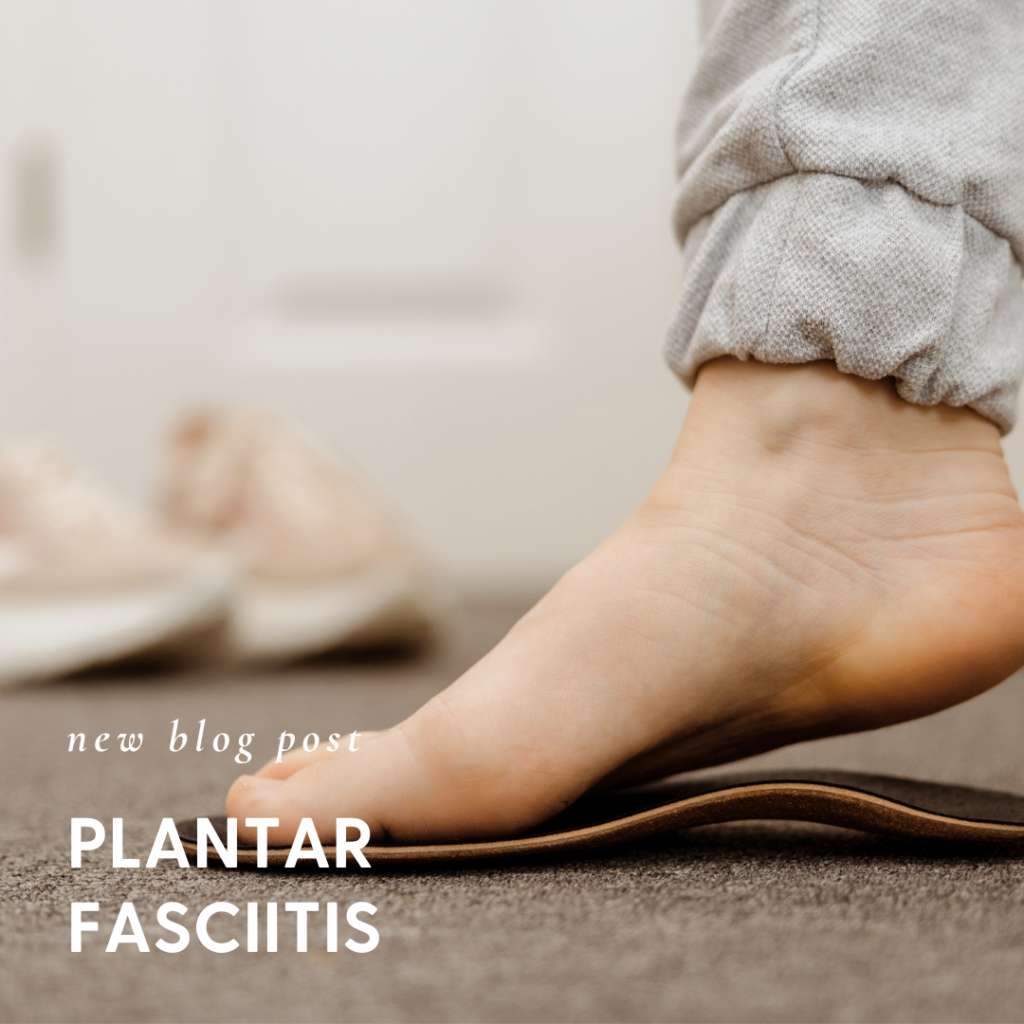
Pain under the heel is commonly called plantar fasciitis. Plantar fasciopathy is often a better term because the problem usually involves changes in tissue load and capacity rather than simple inflammation.
What is plantar fasciopathy?
The plantar fascia is a strong band of connective tissue running along the sole of the foot. It helps support the arch and stores and releases energy during walking and running.
Symptoms often develop when walking, standing or running loads increase beyond the tissue’s current capacity. Footwear, calf strength, body weight, work demands and recovery can all contribute.
Typical symptoms
Pain is normally felt under the heel, often towards the inside. The first steps after waking or sitting can be particularly uncomfortable.
Pain may ease as the foot warms up and return after prolonged standing, walking or exercise. Tenderness at the plantar fascia’s heel attachment is common.
How is it assessed?
Diagnosis is usually clinical. Your physiotherapist will discuss recent activity changes, work demands, footwear and the pattern of pain.
Assessment may include foot and ankle movement, calf and foot strength, walking, balance and the ability to perform calf raises or hopping.
Imaging is rarely required unless symptoms are unusual, there has been trauma or another condition such as a stress fracture or nerve problem is suspected.
How can physiotherapy help?
Manual therapy, ankle or foot mobilisation and calf soft-tissue treatment may reduce pain and improve movement when stiffness contributes.
Low-Dye taping can provide short-term support. Footwear modification, heel cushioning or orthotics may also help selected people by reducing aggravating load.
These options can make activity more comfortable, but passive treatment alone does not improve the tissue’s capacity.
Exercise and loading
Progressive loading is central to long-term rehabilitation. Exercise may include calf raises, plantar fascia-specific work, foot strengthening and later heavier resistance.
Walking, running and work demands are adjusted temporarily and then rebuilt. Complete rest is rarely required, but repeatedly provoking a major flare will slow progress.
How long does it take?
Plantar heel pain can take several months to settle, particularly when it has been present for a long time. Improvements are often gradual rather than immediate.
The most effective plan combines symptom relief with progressive exercise, sensible load management and footwear support where helpful. The goal is to build a foot that can tolerate your life—not simply avoid using it.