
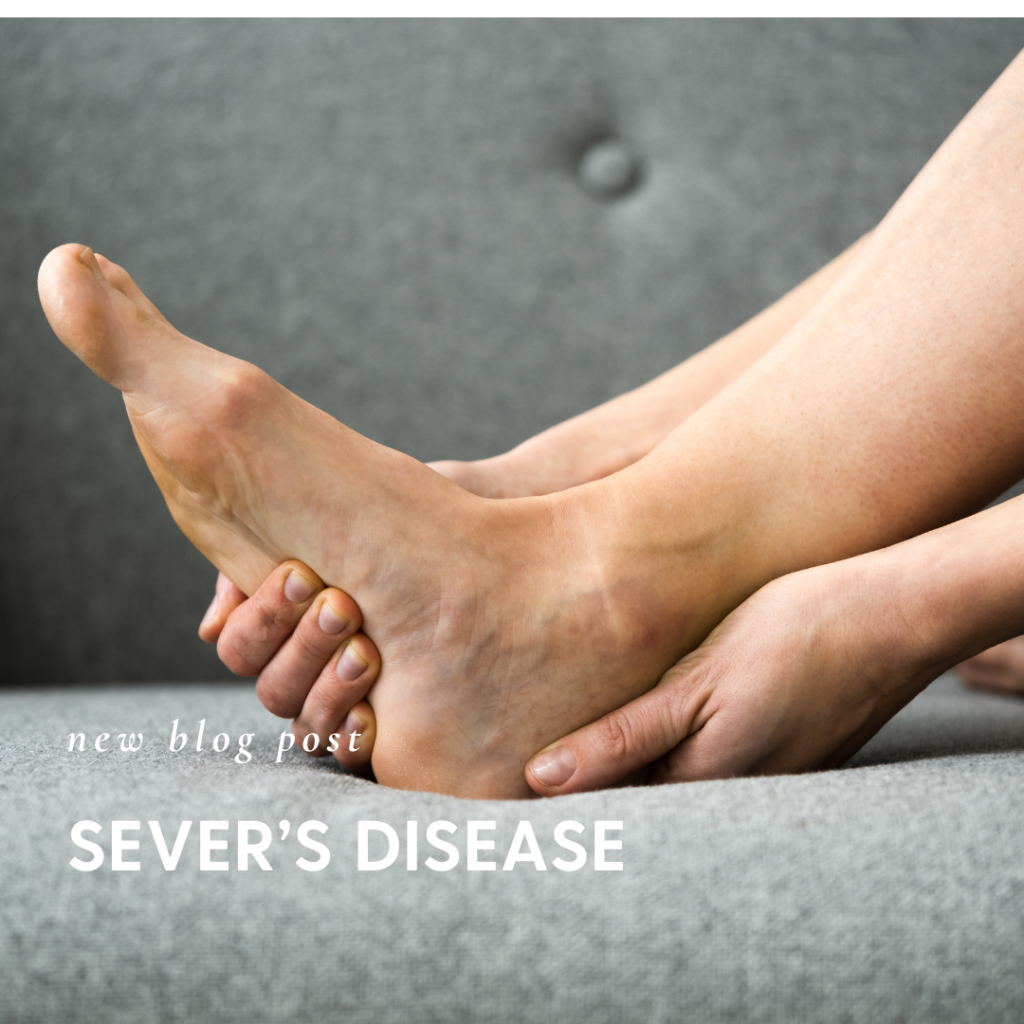
Sever’s disease is a common cause of heel pain in growing children. Despite the name, it is not an illness and does not cause permanent damage to the heel.
What is Sever’s disease?
Sever’s disease, or calcaneal apophysitis, affects the growing area at the back of the heel bone near the Achilles tendon attachment.
It commonly occurs during growth spurts, particularly in children involved in running and jumping sports. The growth area becomes sensitive when activity exceeds its current tolerance.
Typical symptoms
Pain is normally felt at the back or underside of the heel and worsens with running, jumping or prolonged sport.
The heel may be tender when squeezed from both sides. A child may limp or walk on the toes after activity. One or both heels can be affected.
Symptoms often fluctuate with training volume, playing surfaces, footwear and periods of rapid growth.
How is it assessed?
Diagnosis is usually clinical. The physiotherapist asks about the child’s age, growth, sport, recent training changes and symptoms during and after activity.
Assessment may include heel tenderness, the heel-squeeze test, ankle movement, calf strength and flexibility, foot control, walking and hopping.
Imaging is rarely required unless there has been significant trauma, symptoms are unusual or the condition is not following the expected pattern.
How can physiotherapy help?
Treatment aims to keep activity manageable rather than stopping sport indefinitely. Running and jumping may be temporarily reduced, sessions shortened or some training replaced with lower-impact conditioning.
Manual therapy may include ankle and foot mobilisation and calf soft-tissue treatment when stiffness or guarding contributes. This may improve comfort, but it is combined with exercise and load advice.
Exercise rehabilitation
Early exercise restores comfortable ankle movement and introduces calf loading at a tolerable level.
Calf raises progress from double-leg to single-leg and heavier resistance. Foot and hip strength may also support running and landing.
Skipping, hopping and running are gradually reintroduced before full sport. The response later that day and the following morning helps guide progression.
Heel cups and footwear
Heel cups, small heel lifts, supportive footwear or taping can reduce symptoms for some children. These options are chosen according to comfort, activity and cost and are not compulsory for everyone.
How long does it take?
Sever’s disease resolves as the heel growth area matures, so it does not continue into adulthood. Symptoms may still fluctuate for weeks or months and recur during growth or heavy training.
The heel is not being damaged. Education, sensible activity modification, manual therapy where useful, progressive strengthening and appropriate footwear support can keep most children active while it settles.